
The Honest Answer on Founder Posting Frequency
Post three to five times a week. That's the number.
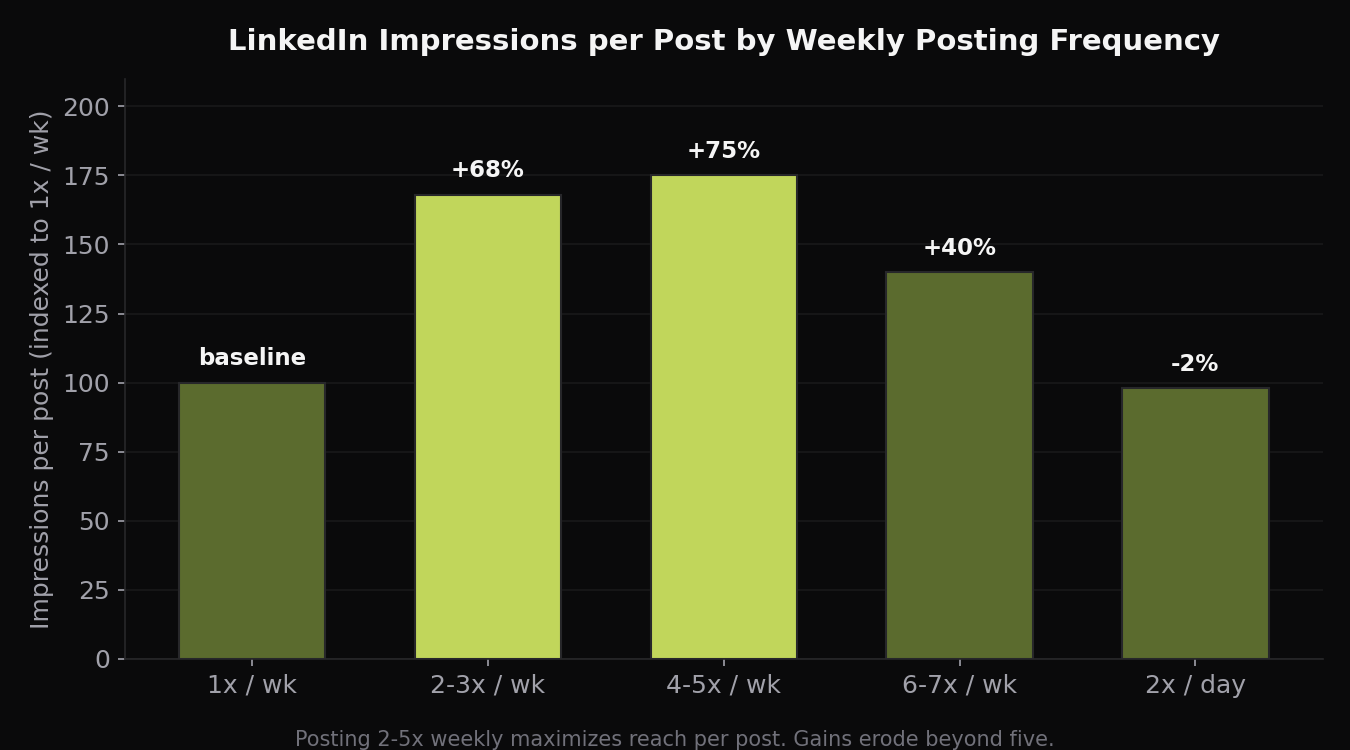
Every large study lands in the same place. Buffer analyzed more than two million posts across 94,000 accounts and found two to five posts a week beats every other cadence.
Founders always want a bigger number. They think more posts mean more pipeline. They have it backward.
Frequency is a floor, not a strategy. Hit the floor, then stop chasing volume and start sharpening your voice.
The question hides a better one. Not how often, but how long can you hold a cadence without breaking. Answer that and the frequency takes care of itself.
Why Three to Five Posts a Week Wins
The math rewards showing up a few times a week, not every day.
Buffer's data shows accounts at this cadence earn roughly 1,182 more impressions per post than accounts posting once a week. Same effort per post. Far more reach.
LinkedIn says it plainly. Profiles and pages that post four times a week see a 2x lift in engagement over those posting less.
Three posts is the entry point. Five is the ceiling for anyone running a company at the same time.
Inside that band the algorithm learns you and the audience remembers you. Drop below it and you reset to stranger every week.
Some accounts post eleven times a week and earn nearly triple the engagements per post of weekly posters. That's a media team, not a founder.
You don't have their hours. You have a company to run. Three to five is the band built for one person with a real job.
Where Founder Posting Frequency Breaks Down
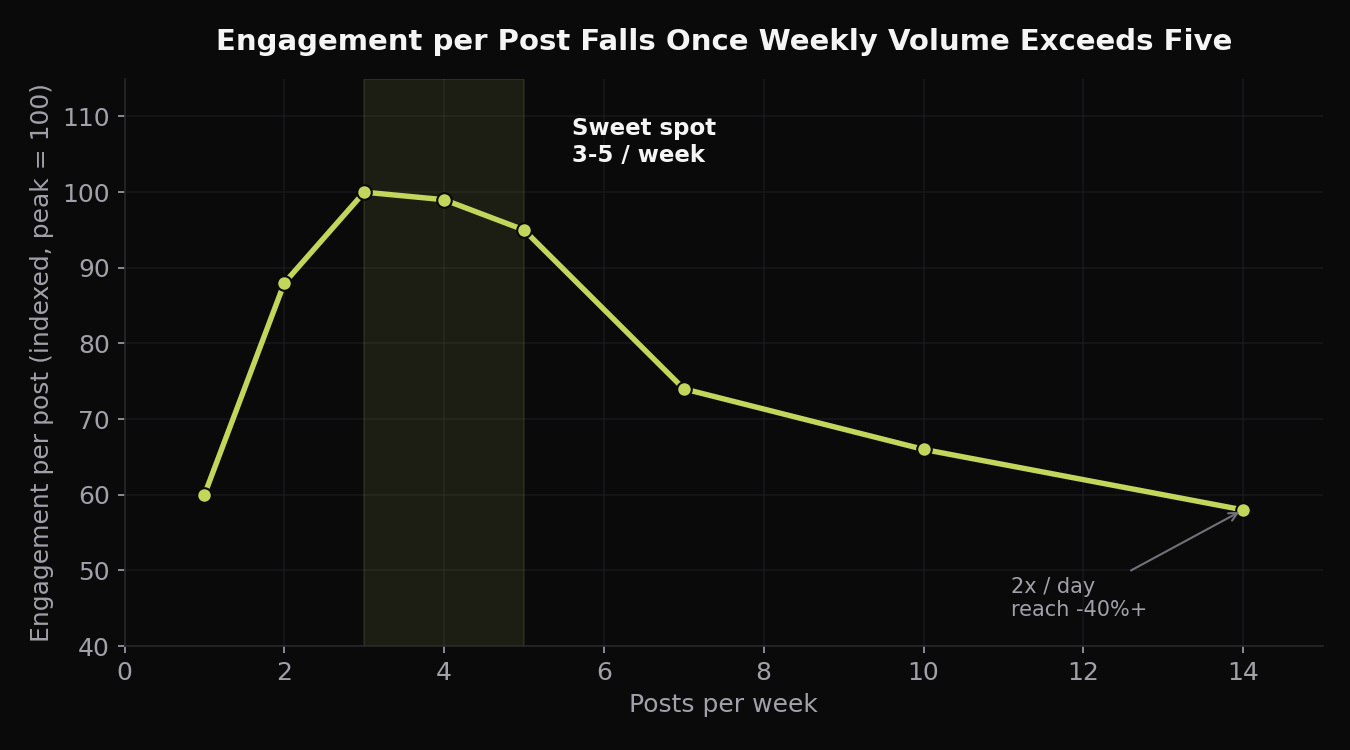
More is not better past five. It's worse.
Push beyond five posts a week and engagement per post drops 18 to 32%. Post twice a day and median reach per post falls more than 40%.
You're not feeding the machine. You're flooding your own audience.
Every extra post competes with your last one. You split your reach, dilute your best ideas, and train people to scroll past your name.
The One-Post-a-Day Trap
Daily posting sounds disciplined. For most founders it's a slow leak.
You run out of real things to say by day four. The rest is filler, and filler teaches your audience that your name means noise.
Three sharp posts beat seven soft ones. Always.
The Case for Cadence Over Volume
Here's the number that should change how you think about posting.
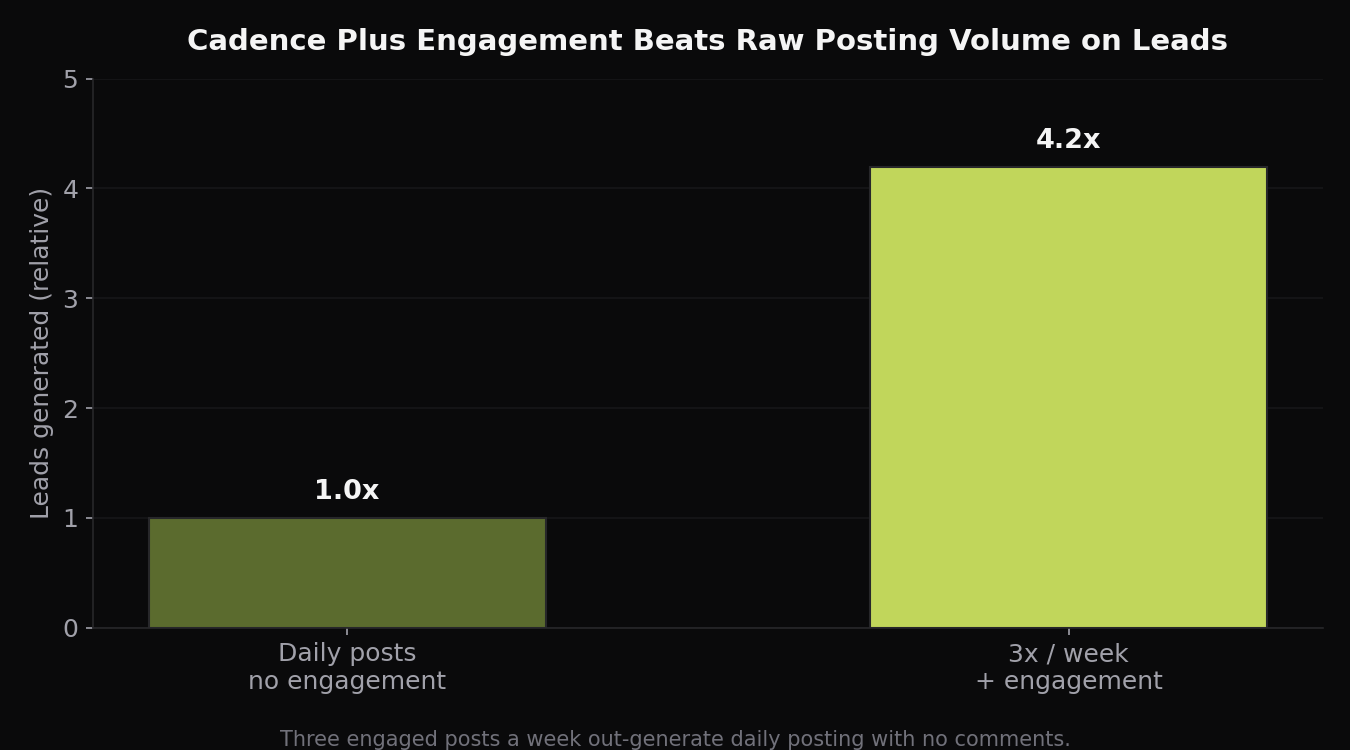
Accounts posting three times a week with active inbound engagement out-generated leads by 4.2x over accounts posting daily with none.
Same platform. Fewer posts. Four times the pipeline.
Frequency gets you in the room. Engagement closes the distance. You can't out-post a weak point of view, and you can't out-frequency silence in your own comments.
Pick a cadence you can hold for a year. Consistency compounds. Bursts fade.
The First Ninety Minutes Decide the Post
Cadence sets the rhythm. Timing sets the ceiling.
If a post earns little in its first ninety minutes, the algorithm calls it dead and stops showing it. Posting more often won't save a post nobody engages with early.
So fewer posts with real attention behind them beat a flood the feed ignores.
How Cadence Changes by Founder Stage
The right number shifts with what you're building.
Pre-seed and seed founders should sit at two to three posts a week. You're still searching for the message, and every post is a test, not a broadcast.
Series A and B founders can run three to five. The positioning is clearer and the audience is bigger, so a content system earns its keep.
The trap is copying a full-time creator's ten-a-week schedule. They sell content. You sell software. Match your cadence to your job, not to someone whose job is the feed.
The Founder Ramp From Zero to Five Posts
Don't start at five. You'll quit by week three.
Start at two. The same two days every week. Tuesday and Thursday, or whatever you can hold without thinking.
Weeks One to Four
Post twice a week. Build the habit before the volume.
Two posts you ship beat five you plan. The founder who posts twice for a year buries the one who posts daily for a month.
Months Two and Three
Add a third day once two runs on autopilot. Three a week is where most founders should live.
It's enough to stay visible and rare enough to stay sharp.
When to Reach for Five
Go to five only when a system feeds you ideas, not when willpower does.
One recorded session can carry a week of posts. Build that engine first and read the 4-hour founder content system before you touch daily volume.
What to Post When You Only Post Three Times
Three posts a week leaves no room for filler. Every slot has to earn pipeline.
Run the same three shapes each week so you never stare at a blank screen.
The Opinion Post
Take a stance on something your industry gets wrong. Name the wrong belief, then state yours.
A 200-word post with one clear thesis beats a 2,000-word article that hedges. Conviction travels. Caution sinks.
The Proof Post
Share one number only you can see. A result, a benchmark, a signal from inside your business.
Directional data from real work outweighs any research report. You lived it. They didn't.
The Story Post
Tell one thing that happened. A deal you lost, a call that changed your mind, a mistake that cost you.
Buyers remember the founder who shows the work, not the one who polishes the pitch.
What Personal Posts Do That Company Pages Cannot
The founder's name is the unfair advantage. Use it.
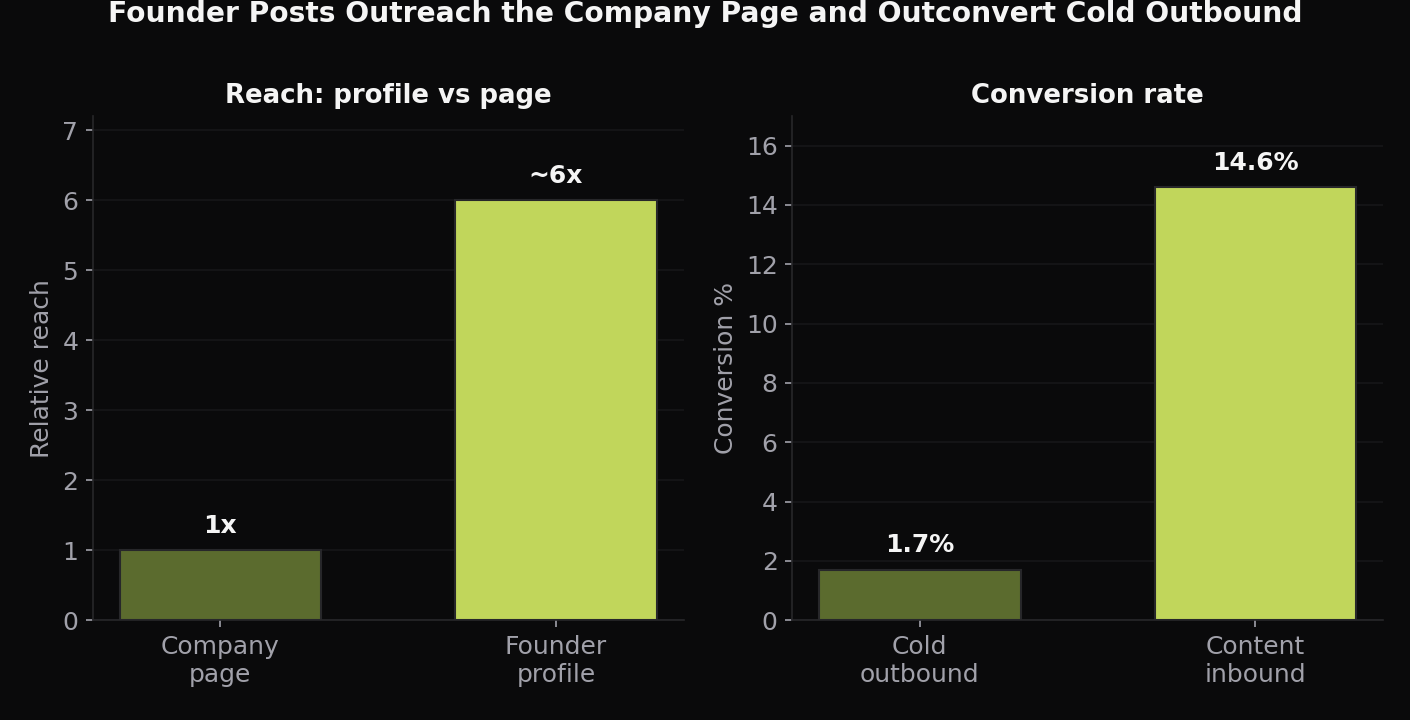
Personal profiles pull five to seven times the reach of company pages. People trust a face faster than a logo.
Buyers move that way too. Sixty percent of B2B buyers discover brands through creator content before they ever fill out a form.
Inbound proves it in dollars. A prospect who messages you after reading your post converts at 14.6%. Cold outbound converts at 1.7%.
Adam Robinson took Retention.com and RB2B to $30M in annual revenue and $15M in profit in five years with zero funding, mostly off his own LinkedIn posts. One post about a cease-and-desist letter brought in 1,600 qualified leads.
Same company. Same product. The reach lived in his name, not the brand page. That gap is the whole reason founder brand beats company brand in B2B.
Robinson didn't win by posting most. He won by posting the same voice, every week, for years, until his name became the channel.
The Metrics That Prove Your Cadence Works
Stop counting likes. Likes don't pay you.
Track three numbers instead.
Reply rate first. When people DM or email after a post, you're building a funnel. Three to five real conversations a month means your cadence is landing.
Decision-maker reach second. LinkedIn shows you who views your posts. The right titles climbing means your positioning is getting sharper.
Inbound mentions third. When a sales call opens with "I read your post on X," your content already did the selling.
Watch those three and the vanity metrics stop mattering. A post with twelve likes from twelve buyers beats a post with a thousand likes from nobody who can pay.
Set a ninety-day window before you judge any of it. Cadence pays on a delay. First inbound signals show up three to six weeks in, and real pipeline lags further behind.
Why Founders Quit Before the Cadence Pays
Most founders don't fail at LinkedIn because they post too little. They fail because they stop.
Week one feels great. Week three feels pointless. The likes are thin and no deal has closed, so the posting stops right before it would have worked.
Cadence pays on compounding, not on the first post. The audience that ignores you in March books calls with you in September.
Treat posting like product, not like a campaign. You don't ship once and check the chart that afternoon. You ship, you hold, you let the reps add up.
Post three times a week for a year and you send 150 signals into the market. Post daily for three weeks and you send 21, then vanish.
How to Post Often Without the Time Sink
Frequency dies the moment it depends on inspiration. Build a system instead.
Record one fifteen-minute take on something you already know cold. Transcribe it. That single session feeds a week of posts.
The founder gives 30 to 60 minutes a week. The system carries the rest, the same way the best inbound engines on LinkedIn run.
That's the whole play. Show up three to five times a week, hold it for a year, and let your name do work your ad budget never could.
Frequency is the floor. Your voice is the building.