
The Data on Personal vs Company Brand
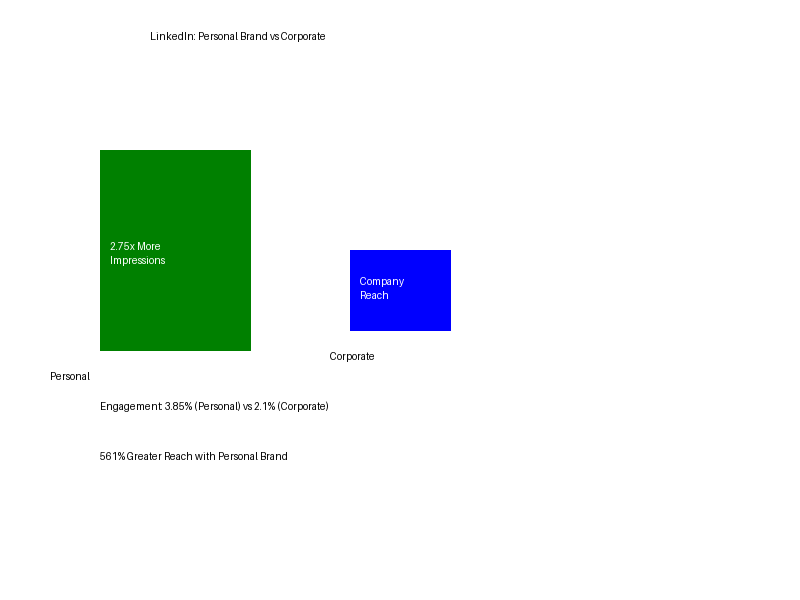
Personal profiles generate 2.75x more impressions than company pages on LinkedIn.
Engagement rate on personal content: 3.85%. Engagement rate on company pages: 2.1%.
Your personal name attached to content reaches 561% further than the company logo attached to the same content.
The debate is over. Personal brand wins every metric.
But the strategic question lingers: should you build personal first? Or do you build them in parallel?
The answer changes depending on where your company is. The sequencing matters more than the strategy.
Why This Debate Was Never About Branding
The tension between personal and company branding has always been treated as a choice: personal OR company.
That's a false binary. The real question is: which one do you build to escape velocity first?
LinkedIn's algorithm trusts individuals more than brands. Users are 3x more likely to trust content from a person than from a logo. This isn't a preference. It's structural.
So the question becomes: how do you use that trust gap to lift both yourself and the company?
Answer: build personal brand to a threshold, then let it carry the company up with it.
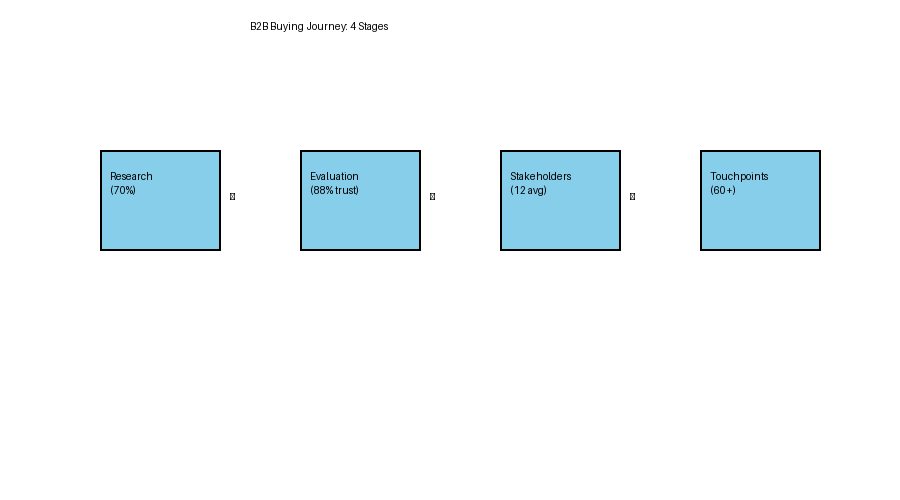
The Exact Timeline From Pre-Seed to Series B
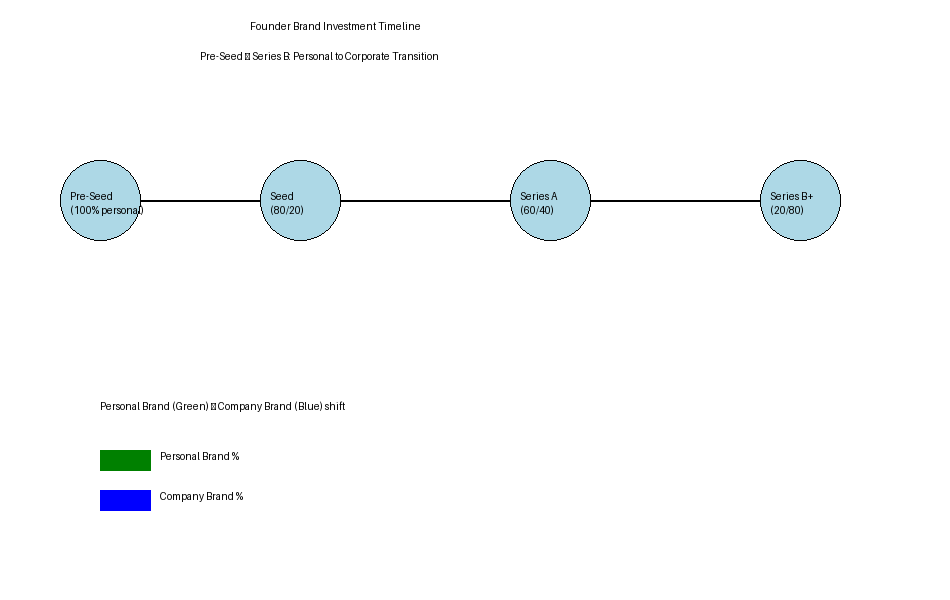
Pre-Seed Phase Personal Brand Only
You're raising your first check. You're proving product-market fit exists.
Zero company brand work. You are the company at this stage.
Post about what you're learning. Share the product. Explain the problem you're solving. The audience follows you, not a logo.
Your goal: 5,000-10,000 engaged followers. You need enough visibility that investors recognize your name when it comes across their desk.
Company accounts at this stage are empty. The company page gets 50 followers while your personal page grows to thousands.
Seed Phase Personal Brand Dominates
You've raised your first $1-2M. You're scaling the team.
Your personal brand is still 80% of the company's visibility. But now you start a company account.
The company account doesn't post independently. It amplifies your posts. When you publish something, employees share it from the company account.
This leverages your personal reach while slowly building company presence.
Organic reach for company pages dropped 60-66% from 2024 to 2026. You can't rely on organic company posts to build visibility. Use your personal gravity to lift the company instead.
Hiring should favor people who are willing to share company wins. Your early hires become part of the content distribution network.
Series A Phase Personal Brand Peaks
You've raised $5-10M. You have product-market fit. Enterprise customers are knocking on the door.
Your personal brand is at its strongest. You're the founder with a track record. You've generated real revenue, hired a team, and have proof of execution.
This is when your personal brand does its heaviest lifting. Inbound customers specifically ask to talk to you. Recruiting talks about founder vision because they've seen your content.
The company brand is still secondary but growing. It's becoming a credibility signal: "The CEO is transparent. The CEO publishes. The company must be legit."
77% of consumers are more likely to purchase from a company when its founder has a strong social media presence. You're in the window where that effect is strongest.
Series B and Beyond the Transition Phase
You have $15M+ in revenue. You're building the executive team.
This is when the sequencing matters most. Your personal brand has done its job: it got the company to escape velocity. Now you need to transition visibility to the brand itself.
If you don't transition now, two problems emerge:
First, the company becomes too dependent on you. Investors worry. Customers worry. If you get hit by a bus, the brand collapses.
Second, your personal bandwidth becomes your company's ceiling. You can't scale past what you can personally communicate.
The transition works like this: your personal brand continues but becomes less frequent. You've built enough reputation that you can post monthly instead of weekly.
Your new CMO or VP Marketing starts building the company brand aggressively. They're not competing with you. They're using you as proof of foundation.
Instead of 80/20 personal/company, you shift to 40/60. Then 30/70. Eventually 20/80.
But that foundation you built personally never goes away. Your credibility is now the company's credibility.
How Personal Brand Lifts Company Brand
The mechanics are simple. Personal trust converts to institutional trust.
When a customer talks to you and sees your LinkedIn posts, they connect the founder they met to the content they consumed. The founder isn't just credible because of the pitch. The founder is credible because 10,000 people already validated them.
When a prospect evaluates the company, they research the founder. Your public track record becomes the company's proof of concept.
When you hire, candidates Google you. They see a founder with visibility. They infer the company is going somewhere.
Executives estimate that 44% of their company's market value is directly attributable to the CEO's reputation. For founders, it's even higher in early stages.
The personal brand doesn't just help the company. It multiplies the company's credibility beyond what the company could build alone.
The Timing Mistake Most Founders Make
The mistake is trying to build both equally from day one.
You post on the company account. You post on the personal account. You split your effort.
Company posts reach 50 people. Personal posts reach 5,000. You've diluted your leverage.
Instead, concentrate force. Build personal brand to critical mass. Once you have visibility and credibility, the company account becomes a force multiplier instead of a separate channel.
Second mistake: waiting too long to start the company brand transition.
If you're at Series B with zero company presence, you've built an addiction to founder visibility. Investors will push you to diversify. Customers will demand institutional knowledge beyond you.
Start the transition at Series A, not Series B+. Give yourself runway to build company brand while your personal brand is still strong enough to amplify it.
When the Brand Sequencing Breaks
There are rare cases where the sequencing doesn't apply.
If you're entering an existing market with a mature category, you might need company brand first. Enterprise software buyer committees don't care about your Twitter following.
If you have a co-founding team with multiple visible founders, you can distribute personal brand across multiple people rather than concentrating it on you.
If you're in a regulated industry, personal brand visibility might carry liability risk. Company brand becomes the safer approach.
But in the default case (founder-led SaaS, early-stage, emerging market), the sequence is: personal first, company follow, then transition