
Every hook article on Google treats engagement as the finish line. For founders, engagement is the warmup lap. The hook you pick decides whether the right buyers even see your post, and every other lesson in this article flows from that one fact.
A hook is a filter, never a net. Ten thousand impressions from the wrong audience will sink pipeline faster than fifty impressions from the right one. Creators chase curiosity while founders should chase qualification.
This guide covers the seven hook categories that work for founders, the character rules that move reach, and 27 templates with live founder examples you can steal today. The framing came from building content systems for founders with zero bandwidth and everything to lose.
Why Founder Hooks Need Their Own Playbook
LinkedIn creators earn a living from engagement. Founders earn a living from pipeline. Those are two separate jobs, and they demand two separate hook strategies.
The creator playbook optimizes every hook for the widest possible audience with vague questions, cliffhangers, and provocative statements. It works for creators with millions of followers who maximize lean-in across every demo, every industry, every job title.
Founders who copy that playbook end up with engaged comment sections full of coaches, ghostwriters, and fellow founders trading reactions. The comments look good in screenshots. The pipeline stays empty.
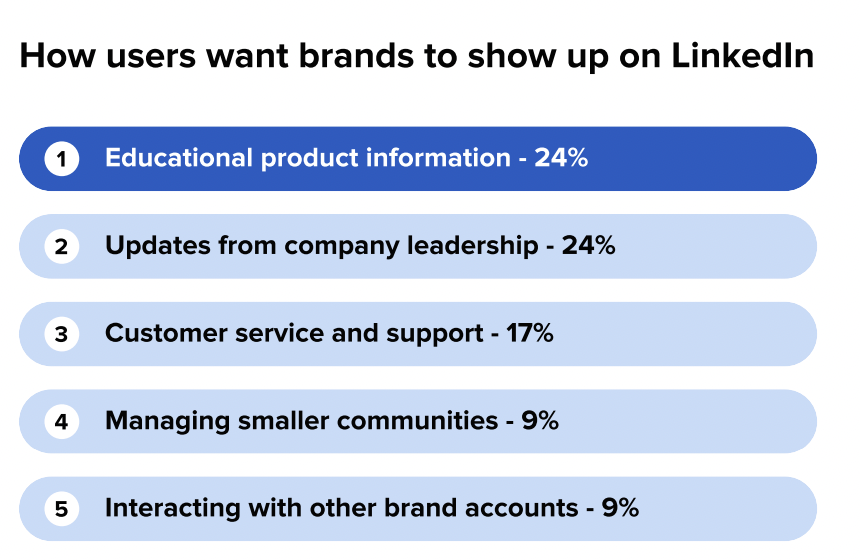
Your hook makes three silent decisions before anyone reads the body, filtering who leans in, setting the frame the audience expects, and driving what the reader does next. Creator hooks optimize for the first decision alone. Founder hooks have to win all three.
The 3 Second Test Every Hook Must Pass
LinkedIn shows desktop users roughly 210 characters before the "see more" cut, and mobile users see closer to 140. That window is the entire battle. Anything past it reads only if the hook earned the click first.
Founder hooks should pass three tests in those three seconds. The exact buyer recognizes themselves inside the sentence. The specificity earns the lean-in over any vague competing hook. A qualified DM becomes the natural next move for the reader.
Most hooks fail the first test. They are written for everyone, which means they resonate with nobody who matters. A tight hook pushing 400 buyers into your feed beats a viral hook pushing 40,000 strangers.
The 7 Hook Categories Founders Should Use
Every founder hook worth writing falls into one of seven categories. Each one serves a separate business outcome. You pick based on the goal, never based on whichever template went viral last week.
Contrarian Hooks for Authority Building
A contrarian hook takes a position the crowd would flinch at. It signals conviction and filters for people who respect a strong take. Used well, these hooks stack authority faster than anything else on the platform.
Example from Justin Welsh, who built a multi-million dollar solo business on LinkedIn after walking away from two executive roles. His viral hooks usually open with a line that sets up the counter-argument. "The advice to niche down is half right. The real move is sharper."
Contrarian hooks work when the position is specific and defended in the body. They fail when the take is shock for its own sake, which signals performative instead of principled.
Specific Result Hooks for Credibility
A specific result hook leads with a concrete outcome or dollar figure. It earns instant credibility and filters for buyers chasing the same outcome.
An example that lands every time. "We went from 0 to 12 qualified demos per week using one LinkedIn post format." That hook is doing three jobs at once, signaling a result, filtering for operators with a demo problem, and earning the click through precision.
Generic result hooks like "we grew fast" fail every time. Numbers, timelines, and specificity are the filter.
Lesson From Failure Hooks for Trust
A failure hook opens with something that went wrong. It builds trust through vulnerability, and it performs disproportionately well on LinkedIn because most founders post curated wins only.
Example opener that lands. "I spent 18 months building a feature nobody asked for. Here is what I learned the hard way." The reader leans in because the premise is specific, the stakes are real, and the promise of a lesson justifies the read.
Failure hooks fail when the failure feels staged or too small. The stake has to match the lesson size.
ICP Question Hooks for Buyer Filtering
An ICP question hook asks a question only your ideal customer would nod at. This is the single strongest hook category for founders who want pipeline over reach.
Example for a Head of Marketing buyer. "Why every-channel marketing teams always lose to narrow-lane ones." That hook is almost invisible to a generic audience. A Head of Marketing who is losing that exact fight will stop mid-scroll.
ICP questions rarely go viral, and they should never try to. The goal is 500 right people, zero wrong ones.
Behind the Scenes Hooks for Relatability
A behind-the-scenes hook exposes the operational layer most founders hide. It signals trust through transparency and invites buyers into the reality of how your business runs.
Example. "Here is the exact agenda we use every Monday to close 20% more deals by Friday." That hook surfaces something operators cannot get from a marketing blog. It feels earned, even before the reader sees the body.
These hooks work because LinkedIn is full of surface-level advice. Real operational detail stands out through contrast alone.
Data Shock Hooks for Viral Reach
A data shock hook surfaces a stat your audience had no idea existed. Used sparingly, this category drives the widest reach of the seven.
Example. "LinkedIn personal profiles generate 8x more engagement than company pages, and founders still split their time between both." Stat plus implication. The reader leans in to understand the implication beyond the number alone.
The trap with data shock hooks is over-use. Run two or three per month across your posting cadence. Past that, they start to feel like a listicle instead of a founder voice.
Story Open Hooks for Dwell Time
A story open hook drops the reader mid-scene. Story hooks win dwell time because the brain reads narrative faster than explanation, and the 2026 LinkedIn algorithm weighs dwell time as a primary ranking signal.
Example. "Last Thursday at 11pm, I was on a call with a founder who had burned through $4M and had six weeks of runway left." The reader has to keep reading to learn the outcome, which is exactly what dwell time measures.
Story hooks fail when the opening scene has zero stakes. Specific time, specific stakes, specific stranger. Every element earns the next line.
Positioning comes before posting. Book a 15-min fit call
Character Count Rules That Actually Matter
Every hook guide cites character counts. Few connect them to the thing that decides whether the hook works at all, which is the 210-character truncation line on LinkedIn desktop.
Desktop shows roughly 210 characters before "see more" cuts the post. Mobile shows around 140.
Line 1 should stay under 62 characters, line 2 under 50. One line is ideal. Two lines is the cap.
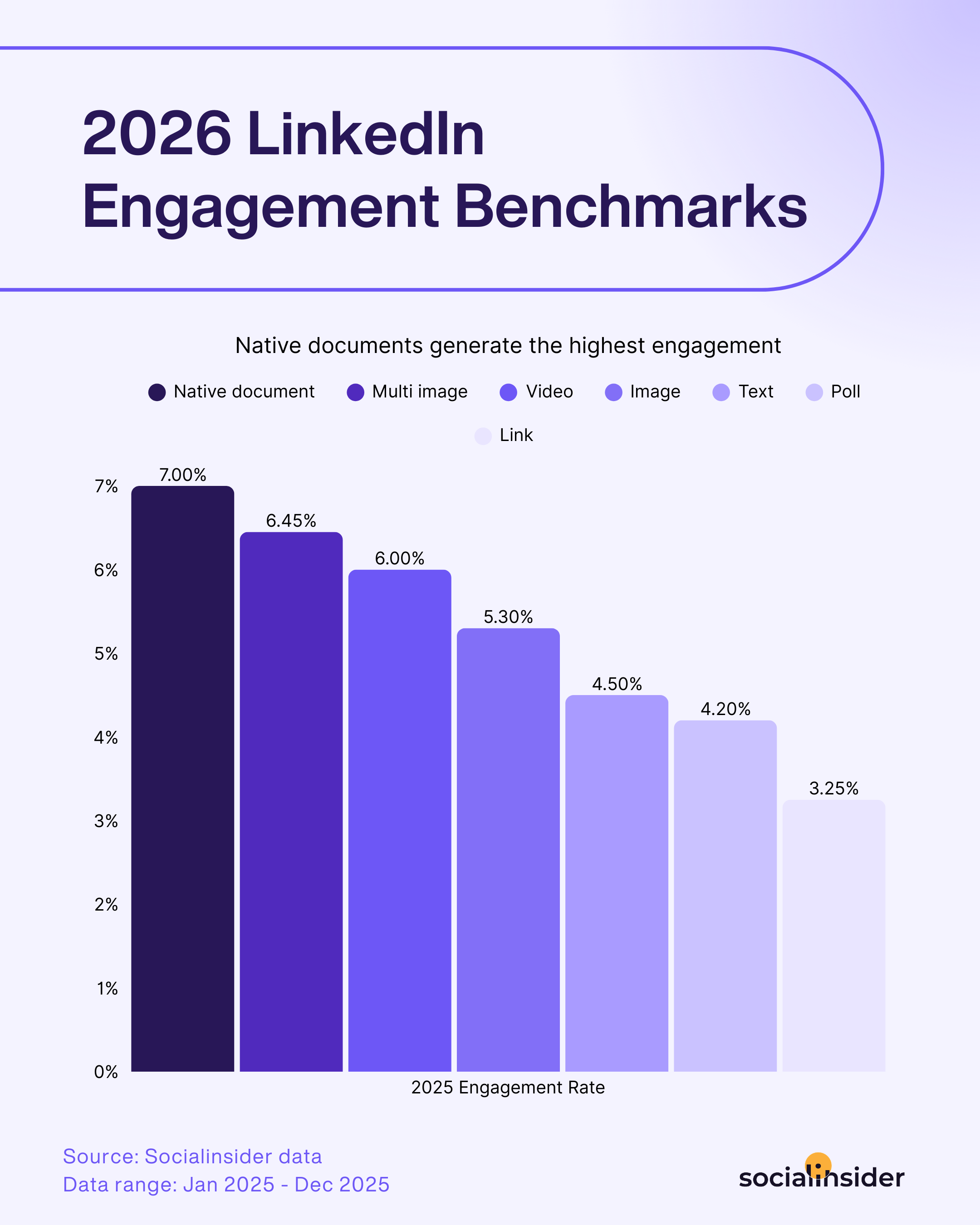
Posts in the 1,301 to 2,500 character range hit the top engagement bracket at 2.61 to 2.67 percent. The hook gets the click, and the body length governs how long readers stay. Both have to be right.
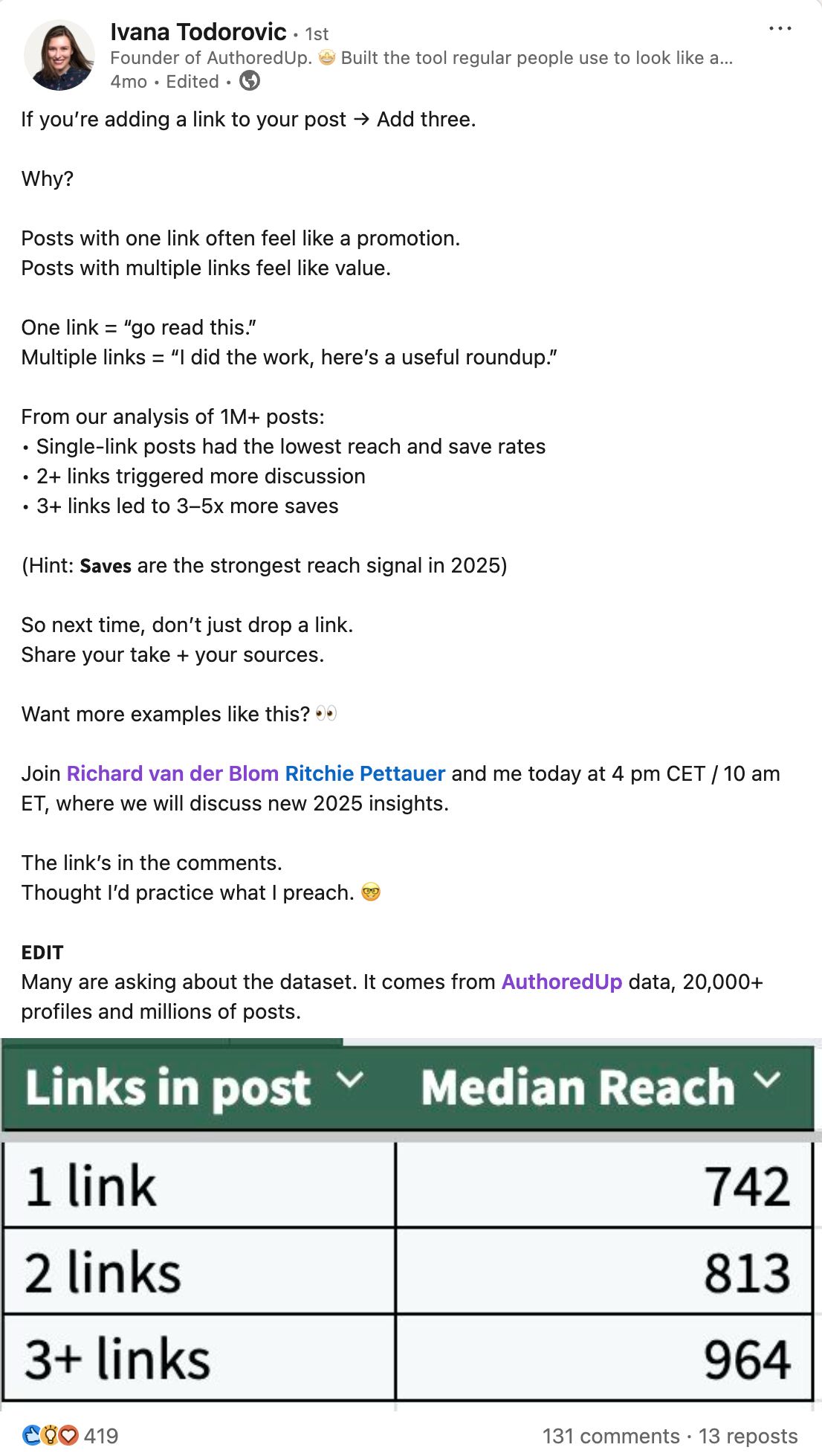
External links inside the post body carry a 60 percent reach penalty, so every hook with a linked body is already fighting the algorithm. Push links to comments, every time.
The Pipeline Versus Vanity Hook Framework
Before writing any hook, decide which outcome the post has to drive. There are three.
Authority posts build credibility and compound over months. Pipeline posts drive DMs, demo requests, and qualified inbound. Reach posts earn impressions, saves, and cross-niche visibility.
Match hook category to outcome. Contrarian and Behind the Scenes drive authority. ICP Question and Specific Result drive pipeline.
Lesson From Failure and Story Open drive trust, which powers both. Data Shock drives reach.
The mistake most founders make is writing hooks that chase reach and then wondering why the pipeline stays empty. The algorithm rewards reach. Pipeline rewards precision.
27 Founder Hook Templates With Live Examples
These 27 templates cover the seven categories. Use them as starting structures, swap in your specifics, and test relentlessly in the feed.
Contrarian (Templates 1-5)
1. The advice to [popular action] is half right. The real move is [sharper action].
2. Everyone says [common belief]. After [specific years/deals/revenue], I think the opposite.
3. [Industry] has been telling you to [do X]. Here is what moves the needle.
4. [Credentialed person] told me to [do X]. Ignoring that advice saved the business.
5. The [common metric] you are chasing is a vanity number. Here is the one that matters.
Specific Result (Templates 6-10)
6. We went from [specific starting point] to [specific outcome] in [exact timeline].
7. [Number] qualified meetings in [timeframe] from [specific channel]. Here is the playbook.
8. [Specific dollar amount] in pipeline from [specific action], replicated across [number] quarters.
9. One LinkedIn post format drove [specific outcome]. I have used it [number] times since.
10. [Counterintuitive action] cut our [specific metric] by [percent] in [timeframe].
Lesson From Failure (Templates 11-15)
11. I spent [specific time] building [specific thing]. Nobody used it.
12. We raised [amount] and still ran out of money. Here is what I wish I had known.
13. [Specific number] hires later, I finally understand why the first [number] left.
14. Our [product/campaign/launch] tanked on [specific date]. Three lessons I am still paying for.
15. I fired our best customer on purpose. The reason changed how we sold for good.
ICP Question (Templates 16-19)
16. Why [specific role] always lose to [smaller/newer/simpler competitor].
17. If you are [specific role] at a [specific stage company], you have hit this wall.
18. [Specific operational pain] has no solution inside [common software tool]. Here is why.
19. [Industry role] should stop doing [common practice]. The data in the comments.
Behind the Scenes (Templates 20-22)
20. Here is the exact [document/template/agenda] we use every [cadence] to [specific outcome].
21. The playbook we built for [specific problem], with the numbers attached.
22. I ran our [department/function] for [time]. Here are [number] things I would tell a new operator.
Data Shock (Templates 23-25)
23. [Surprising stat] and most [audience] still [opposite behavior]. Here is the shift.
24. [Specific platform] now [new behavior], and it changes everything for [audience].
25. Only [small percent] of [audience] know this [specific lever]. Using it costs zero.
Story Open (Templates 26-27)
26. [Specific time/place], I was on a call with a founder who had [specific stakes].
27. [Specific moment in timeline], [specific thing happened]. The decision that followed changed [specific outcome].
Hook Mistakes That Tank Founder Reach
The most common founder hook mistake is copying creator structures verbatim. A coach selling a $997 course writes hooks to attract 100,000 browsers, while a founder selling $50,000 contracts needs hooks to attract 50. Same platform, opposite strategy.
The second biggest mistake is leading with credentials. "As a founder of..." loses attention in half a second, because the hook has one job, which is earning the next line. Credentials belong at the end of a post, or better, in the bio.
The third mistake is vague hooks. Phrases like "most founders," "a lot of people," and "everyone knows" are filler that guarantees a scroll. Specificity is the entire game with real numbers, real names, and real moments.
The fourth mistake is writing every hook the same way. LinkedIn's algorithm rewards dwell time, and repetition flattens dwell time across a feed. Rotate the seven categories on purpose.
How to Test and Iterate Your Hooks
Testing hooks as a founder takes ten minutes a week, no content team required. Write three hook options for every post before committing to one.
Post the strongest. Save the other two in a running doc.
Track three numbers for every post. Impressions, DMs from qualified buyers, and comment quality. Engagement rate alone misleads because it mixes creator noise with buyer signal.
Inside thirty days, one hook category always rises to the top. For some founders it is Contrarian. For others it is ICP Question.
Double down on the winner. Kill the others, even the ones that feel personal.
The founders who win on LinkedIn in 2026 will be the ones who stop chasing engagement and start engineering filters. The hook is the filter. Everything else compounds from there.