
Most founders hire a LinkedIn ghostwriter for the wrong reason. They think the writing is the work. The writing is the output. The work is owning a point of view strong enough to write from.
Ghostwriters can scale your voice. They cannot manufacture your conviction.
This guide covers what a ghostwriter actually does, the five-prerequisite fit test that decides whether you are ready to hire one, pricing tiers that make sense in 2026, and the hybrid model winning founders run to keep ownership of their voice while buying back forty hours a month.
What a LinkedIn Ghostwriter Actually Does
A LinkedIn ghostwriter translates your expertise into content that reads like you wrote it. The strong ones run a repeatable operation with four moving parts. They pull your perspective through voice memos, interviews, and content reviews. They write drafts in your cadence and phrasing. They run an editorial calendar aligned to your business goals. They optimize performance through format testing, hook iteration, and comment-section oversight.
The word ghostwriter hides the real shape of the role. It is closer to a fractional content operator than a scribe. A strong ghostwriter thinks in pipeline, follower quality, and dwell time. A weak one thinks in word count.
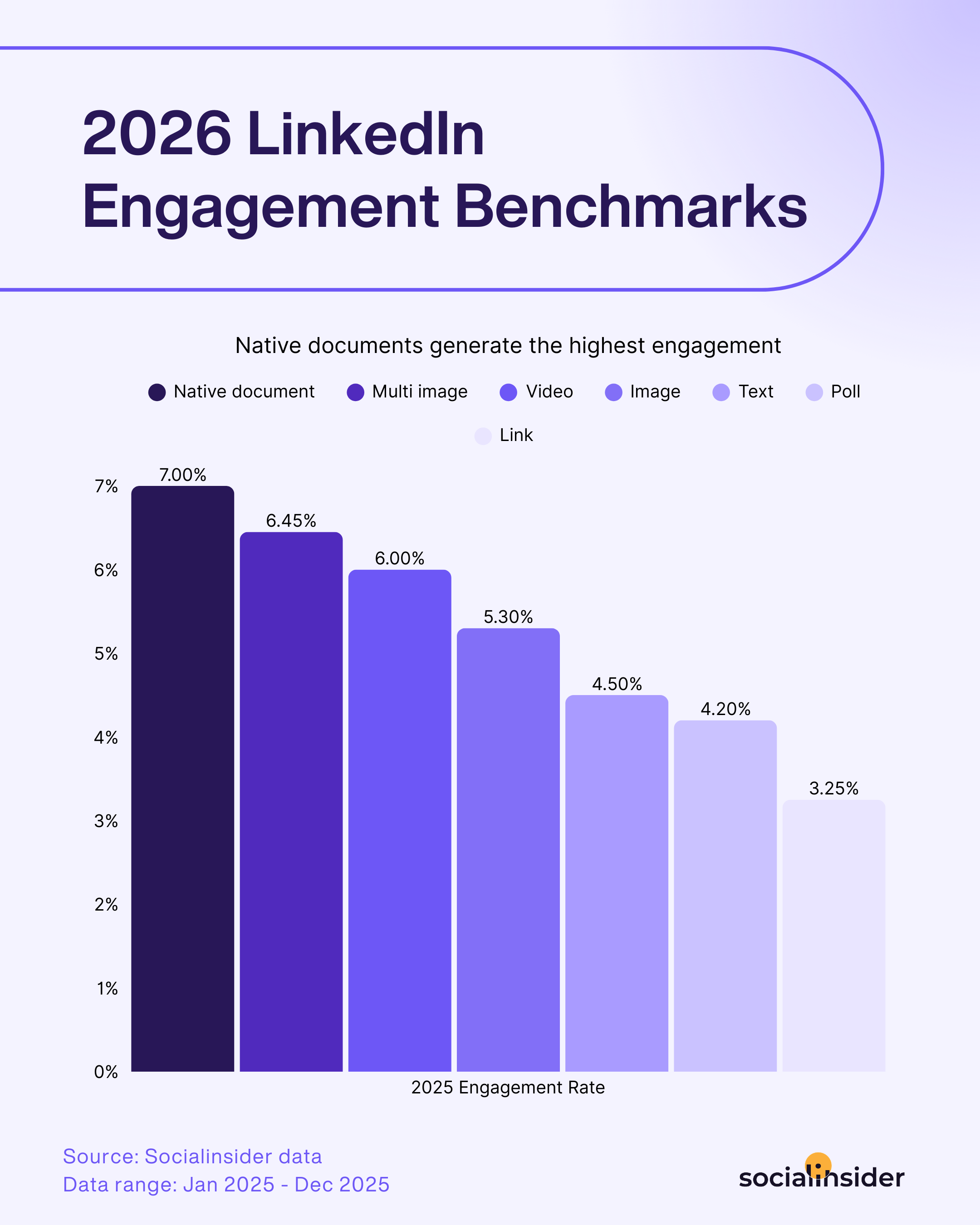
LinkedIn's own numbers explain why the role exists in the first place. CEO-led content now generates 6.8 times more impressions than the average user post, up from four times in 2024. A CEO with 5,000 connections matches the reach of a company page with 300,000 followers. The signal is worth more than the scale.
The Founder Ghostwriter Fit Test
Before hiring anyone, run your own situation through five prerequisites. Skip any of them and the money goes in a hole.
You Own a Point of View Worth Scaling
Ghostwriters interview you. They ask what you believe, what you see in the market, what you would shout if you had five seconds in front of every buyer. If your answers are vague, the output will be vague. No amount of editing fixes a hollow frame.
Spend two weeks writing five LinkedIn posts yourself before any hiring conversation. If you can sustain a stance over five posts, you own enough conviction to brief a writer. If you cannot yet, the work is still upstream.
You Know Who Buys From You
The tightest content operations begin with a buyer profile written in one paragraph. Title, company size, budget range, decision trigger, objection habits. The ghostwriter needs every piece of that input to filter hook selection and framework choice.
Founders who hand over a generic ICP get generic posts in return. The filter works both ways. A writer can only produce sharpness that matches the sharpness of the brief.
You Have Thirty Minutes a Week to Feed the System
The worst founders for ghostwriting are the ones who say, "Handle it all, I'm slammed." That is the fastest route to generic content and a dead pipeline.
The strongest founders for ghostwriting are the ones who commit thirty minutes a week to voice memos, comment replies, and draft reviews. Thirty minutes unlocks the leverage. Zero minutes kills it.
Your Average Deal Size Sits Above Twenty Five Thousand Dollars
Windmill Growth tracks client results across B2B deal sizes and reports 10 to 20x ROI inside six months for B2B founders with average deals above $25K. Founders under $15K struggle to break even unless they publish at high volume for volume-based business models.
The arithmetic runs backward. A $3,000 monthly retainer needs to produce roughly $36,000 in annual new revenue to cover itself. If your average deal is $8,000, that means 4.5 new customers per year from LinkedIn alone before any consideration of LTV.
You Want Pipeline Over Influence
Some founders hire ghostwriters to grow their personal profile for speaking, board seats, or media reputation. That goal shapes a totally separate content plan than pipeline creation.
Get crisp on which game you are playing before you sign any contract. Influence-focused ghostwriting reads broader, more evergreen, heavier on storytelling. Pipeline ghostwriting reads tighter, industry-specific, heavier on frameworks that buyers self-diagnose against.
Pricing Tiers in 2026
Ghostwriter pricing spans an enormous range. The tiers below mirror what founders actually pay in 2026 based on current market data from Windmill Growth, Column Content, and the Dorian Barker agency index.
Entry Tier From Five Hundred to One Thousand Per Month
Entry-level writers produce 4 to 8 posts per month with minimal strategy. Most are solo freelancers building a portfolio. The work is serviceable for founders who already know what they want to say and need a polishing hand.
The risk at this tier is voice drift. Entry-level writers tend to lean into whichever tone feels safest, which flattens a founder's edge over time.
Mid Tier From One Thousand to Three Thousand Per Month
The sweet spot for most founders. At this tier you get 12 to 16 posts per month, a defined strategy, editorial calendar, and hook testing. Most winning B2B founders run inside this range.
Mid-tier providers invest in voice extraction through weekly 20-minute calls or voice memos. They maintain a running library of your frameworks, stories, and customer quotes. They run performance reviews every 30 to 60 days.
Cleverly sits in this tier and publishes client results that include $400,000 in closed revenue and $1.5M in pipeline across six months with a single client. YellowInk reports one financial advisory leader growing to 25 qualified meetings per quarter with $480K in warm pipeline across ninety days.
Premium Executive Tier From Three Thousand to Ten Thousand Plus Per Month
Premium agencies run the full operation. Content, engagement management, DMs, newsletter, podcast repurposing, video scripting. Some provide dedicated strategists and multi-founder team coordination.
The premium tier makes sense for founders with deal sizes above $100K, funded companies pushing executive positioning across multiple founders, or anyone running many content formats beyond LinkedIn. Below those thresholds, premium is overkill.
Why Most Founders Hire a Ghostwriter Too Early
I see this happen every month. A founder reads a post on LinkedIn inbound, runs for eight weeks, gets frustrated at the workload, and hires a ghostwriter hoping to shortcut the grind.
The grind was the work.
Those eight weeks were how you developed your stance, tested hooks against your ICP, and started seeing real-time signals from buyers in your comments. You were learning what lands. Outsourcing then means outsourcing the learning too.
Founders who hire too early end up in a feedback loop where the ghostwriter produces content, the founder reviews half-heartedly, engagement stays flat, the ghostwriter gets blamed, and the contract ends inside four months. The issue was never the writer. The founder had skipped the reps needed to know what signals to brief against.
Give yourself sixty days of writing three posts per week before hiring anyone. That cadence teaches you what resonates with your buyer, what dies flat, and what your voice actually sounds like in public. Then a ghostwriter scales what is already working.
Positioning comes before posting. Book a 15-min fit call
The Voice Extraction Process That Works
Voice extraction is the single most underrated part of the hiring conversation. A ghostwriter who skips it will produce generic B2B drivel. A ghostwriter who runs it well will make you sound more like yourself after eight weeks than your own LinkedIn posts from a year ago.
Strong ghostwriters use a repeatable intake. They collect your existing writing samples. They run a 60-minute foundational interview covering your origin story, frameworks, wins and losses, and contrarian takes. They capture 10 to 15 voice memos in the first month, each 5 to 20 minutes long, covering specific topics. They read every piece of content you have already published and annotate which lines sound like you.
Strong voice extraction produces a voice guide. Cadence rules. Banned phrases. Framework language. Signature sentence starters. Transition habits. Punctuation tendencies.
Weak voice extraction produces a tone deck. Three adjectives and a vibe. Stay far away from anyone who tries to brief from a tone deck.
Real Case Studies With Named Numbers
Named companies and real numbers from published case studies across the industry.
Cleverly worked with a technology client who generated $400,000 in closed revenue and $1.5M in pipeline across six months. The engagement mixed technical expertise messaging with industry case studies, producing 47% higher engagement rates and 53% higher connection acceptance rates over baseline.
YellowInk took a senior financial advisory leader from flat profile performance to 220% growth in search appearances, 25+ qualified meetings per quarter, and $480K in warm pipeline across ninety days.
Media Engine started a client from zero followers and booked eight inbound calls in the first two weeks, scaling across Twitter and LinkedIn to nearly six figures in closed revenue.
Each of those outcomes followed the same structural sequence. Defined buyer, sharp point of view, disciplined cadence, ghostwriter-led execution, founder engagement in the comments. Remove any one of those inputs and the outcome collapses.
Red Flags When Vetting a Ghostwriter
The market got crowded fast. AI-generated LinkedIn content is now the single largest quality issue in ghostwriting, with agencies leaning on ChatGPT for first drafts seeing churn rates 2 to 3 times higher than human-led shops.
Vet for six red flags before signing anything.
First, no voice extraction process beyond an initial kickoff call. If the intake feels casual, the output will sound borrowed.
Second, portfolios where every client sounds identical. Scroll through three or four of their current clients' profiles. If the posts could be swapped between founders without anyone noticing, the writer has no voice-matching discipline.
Third, claims of viral results with no mention of pipeline impact. Viral metrics look good in pitch decks and rarely correlate with revenue outcomes.
Fourth, no process for engagement management. Content without replies to the right comments is half the value gone.
Fifth, aggressive monthly minimums or twelve-month commitments without defined performance reviews. Strong agencies earn their retainer month by month.
Sixth, heavy reliance on AI with no disclosure. Ask directly how much of the first draft comes from AI tools before signing. An honest answer is fine. A dodge is a red flag.
The Hybrid Model Most Winning Founders Use
The founders getting the strongest outcomes refuse to hand over their keyboard. They run a hybrid.
The hybrid works like this. Every Monday, the founder sends a 20-minute voice memo covering a topic, a story, a customer win, or a framework breakdown. The ghostwriter transcribes, extracts the spine, and produces three post drafts by Wednesday. The founder reviews Wednesday evening in bed, approves or rewrites with voice notes, and the ghostwriter finalizes by Friday.
Time commitment from founder, forty-five minutes a week total. Output, four to six polished posts per month, all reading like the founder, all grounded in lived perspective.
The hybrid beats full outsourcing because the founder stays in the voice loop, catches drift early, and retains ownership of the IP. It beats full DIY because the founder stops losing entire Sundays to content creation. Leverage goes in both directions.
How to Measure If Your Ghostwriter Is Working
Vanity engagement metrics mislead constantly. Measure the work against three signals tied to pipeline.
Buyer-quality inbound. Count the DMs per month from people inside your ICP, the book-a-call submissions with real company emails, and the comment threads from your target titles. That is the true output of LinkedIn content for a founder.
Profile-to-website traffic. Track the weekly clicks from your LinkedIn bio link to your site. A ghostwriter who publishes well without moving that number is missing the call-to-action mechanic.
Dwell time on posts. LinkedIn surfaces this inside creator analytics. Posts averaging 2 to 3 seconds of dwell time are scroll-past content. Posts over 30 seconds are doing the work. A strong ghostwriter drives the average upward across 60 days.
If none of those three numbers move after ninety days, the problem is either the brief, the voice extraction, or the writer. Most often it is the brief.
When to Fire Your Ghostwriter
Three situations call for ending the contract.
The founder no longer recognizes their own voice in the posts. That is drift, and by the time it is visible, the audience has felt it for weeks. Audiences sense staleness before founders do.
Content production is on schedule but pipeline signals are flat. Sixty days is enough to see the first signs of movement. Ninety days without a single qualified buyer in the DMs means the system has stalled. Investigate brief quality before blaming the writer, then make the call.
The writer has scaled past your account into ten new accounts and the attention has visibly thinned. Large agencies sometimes onboard clients faster than their strategists can serve them. Watch for post templates repeating across clients, slower reply times, and a rotating cast of account managers.
Fire fast when those signs show up. A bad ghostwriter eats founder time twice, once in correction, once in lost pipeline.
The Founder Playbook From Here
The founders who win with LinkedIn ghostwriters in 2026 will treat the role as a force multiplier for a point of view they already own. They will run the voice extraction obsessively, brief with real ICP data, feed the system thirty minutes a week, and measure against buyer-quality signals over engagement vanity.
The ones who lose will keep treating the ghostwriter as a content machine that prints pipeline in their absence. Machines need input. The input is you.
If your point of view is tight, your ICP is defined, and you have done enough writing reps to know what resonates with buyers, a ghostwriter becomes the highest-leverage move available to a B2B founder in 2026. Everything before that is the real work, and no agency can do it for you.