
Most founder podcast advice was written for creators chasing reach, never for founders chasing pipeline. Hosting your own show feels like the answer because every guru online frames it as the path. The data tells a sharper story.
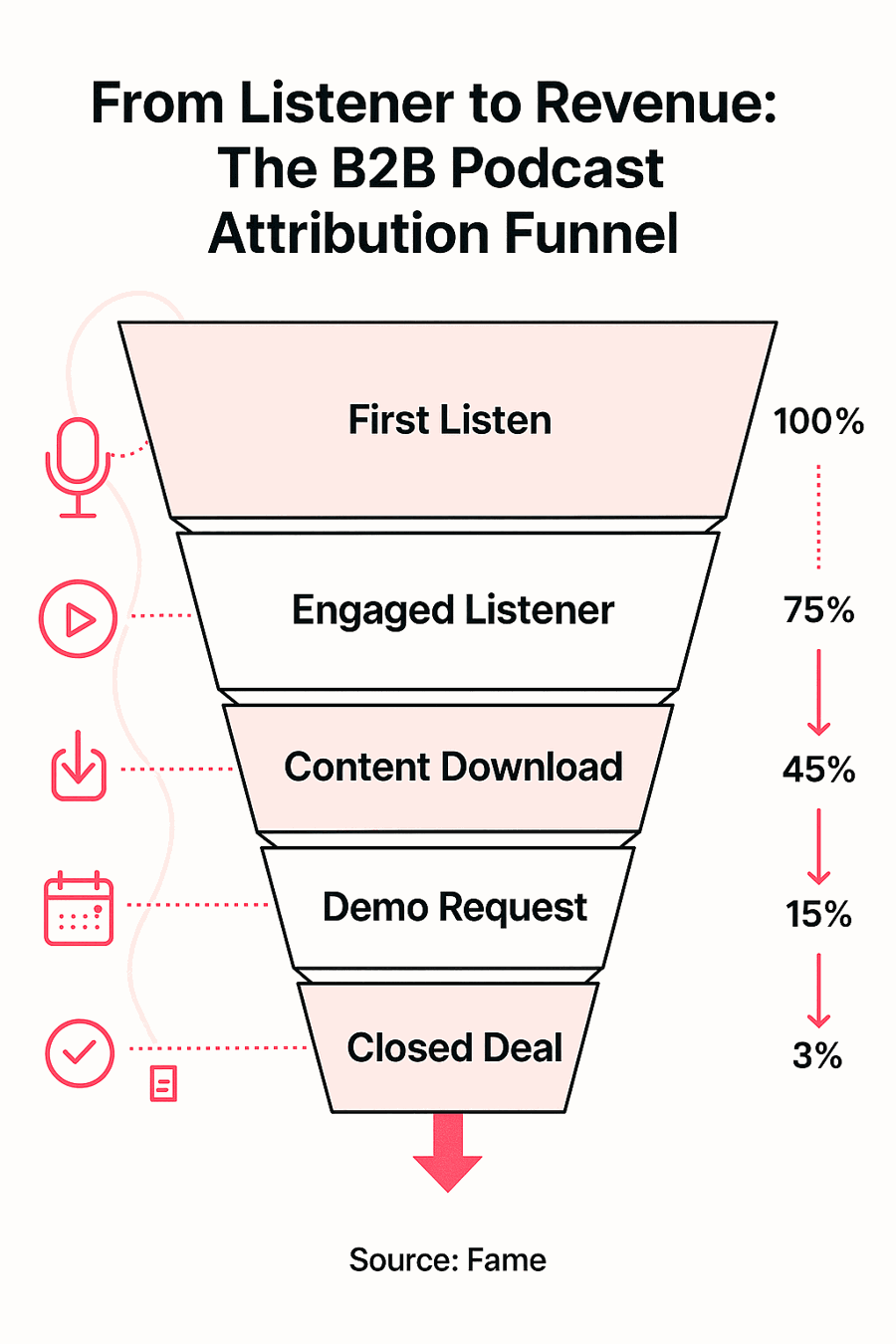
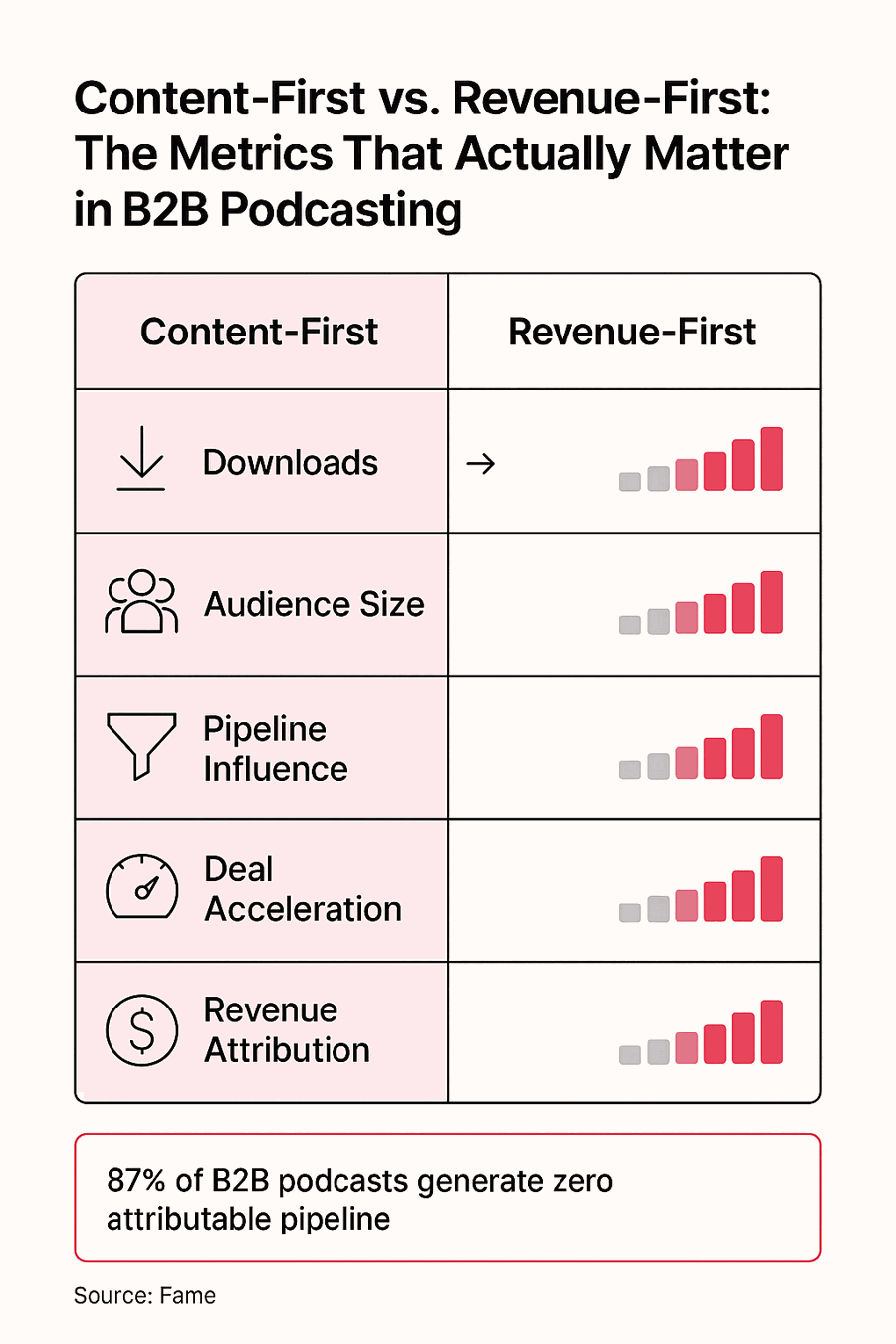
83 percent of senior executives listen to at least one podcast weekly. The average B2B podcast guest-to-client conversion rate sits at 10 percent, and top operators convert 48 percent of strategically selected podcast guests from target accounts into pipeline opportunities. Yet 87 percent of B2B podcasts generate zero attributable pipeline because they were built on content-first thinking rather than revenue-first thinking.
The play that wins for founders looks nothing like the production playbook every agency sells. Guesting on the right shows beats hosting your own show on every metric that matters in the first 18 months. The win sits in show vetting before the pitch, message architecture during the appearance, and post-show DM motion that turns a listener into a calendar slot.
A founder podcast strategy is a system for building B2B pipeline through deliberate guest appearances on shows with high ICP density, paired with post-show DM motion that converts listeners into qualified calls. The goal is never reach. The goal is named accounts opening conversations on your terms.
The Founder Podcast Trap Most Advice Misses
Founders read "start a podcast" advice and reach for a microphone. They rent studio time, hire an editor, build a launch list, and burn six months on production debt before the first download.
The trap is real. Hosting drains time you no longer have. Recording schedules collide with sales calls. Guest pipelines stall when one CEO cancels. Production cycles balloon. Edit queues stack up. Distribution lives in a tab you forget to open.
Meanwhile your competitors get on twelve shows in 60 days with zero production overhead and walk away with twenty pieces of content per appearance, third-party authority, and an inbox full of qualified replies.
Every podcast hosting guide skips the cost. Founders wear the cost the moment they hit record.
Why Guesting Beats Hosting for Pipeline Founders
Guesting buys you three things hosting cannot deliver in year one.
You buy borrowed audience equity. The host built years of trust with a listener base you would otherwise spend years earning. One appearance lands you inside that trust window with zero ramp.
You buy speed. A guest tour with eight to twelve appearances in 60 days produces measurable pipeline before a hosted show finishes pre-launch planning. Cybersecurity firms running deliberate guest-driven motions have attributed $2.3M of pipeline in 9 months to relationships built through podcast appearances.
You buy leverage on every appearance. A single 45-minute conversation generates 20+ assets when handled correctly. Audio clips, video shorts, transcript-sourced LinkedIn posts, blog excerpts, sales enablement quotes, email content, ad creative. Hosting gives you one episode of content per week. Guesting gives you a week of content per appearance.
68 percent of B2B podcast listeners report higher trust in companies featured on shows compared to brands they encounter through other media. That trust shortens sales cycles by 31 percent and lifts average contract values by 23 percent on podcast-influenced deals. The numbers do the talking.
The Pipeline Podcast Tour System
The Pipeline Podcast Tour System runs in four stages. Stage Setting builds the message. Show Vetting picks the venues. The Appearance lands the message. Post-Show Motion converts listeners into calls.
Skip any stage and the tour collapses into press tour theater. Run all four and the tour becomes a sales asset that ships pipeline every week.
Stage One Stage Setting
Before you pitch a single show, build a stance. Write the one sentence claim only you can make. Pick three proof points that back the claim with named outcomes and specific numbers. Decide the bridge ask that ends every appearance.
A stance reads like this. "Founder-led pipeline beats agency-led pipeline at deal sizes above $25K because trust transfers faster from founders than from brand accounts."
Three proof points read like this. "We closed seven enterprise deals in six months on inbound from one founder's LinkedIn motion. Two of those deals named the founder's podcast appearances as the moment they decided to take the call. The third deal closed at 41 percent above standard ACV."
The bridge ask reads like this. "If you run a founder-led GTM motion at a B2B SaaS company, send me a message on LinkedIn with the word pipeline and I will share the playbook."
Every appearance loops back to the stance, the proof points, and the bridge. Buyers hear three episodes and remember the same line three times. That repetition becomes recall, recall becomes recognition, recognition becomes pipeline.
Stage Two Show Vetting
Show selection separates the founders who book pipeline from the founders who book a vanity tour. The 5-Filter Show Selection Test runs every candidate through five gates before the pitch goes out.
Filter one is ICP Density. Score the show on the percentage of listeners who match your buyer profile. A 5,000-listener show with 80 percent ICP density beats a 200,000-listener show with 2 percent ICP density on every pipeline metric. Companies see measurable results with as few as 10 to 24 strategic guest conversations when those guests are decision-makers from target accounts.
Filter two is Host Trust. Listen to four episodes. Read the host's last twenty social posts. Score the host on whether they ask sharp questions, push guests to specifics, and protect listener attention. Hosts who run shallow interviews train their audience to skim. Hosts who run deep interviews train their audience to lean in.
Filter three is Format Match. Long-form interview shows favor depth and proof points. Roundtable shows favor sharp takes and one-liners. News shows favor reactions and specific numbers. Match your stance to the format that makes it land.
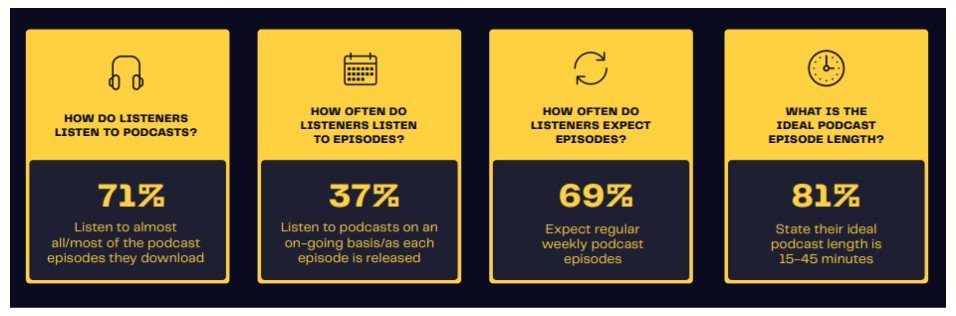
Filter four is Cadence Fit. A weekly show drops your appearance into a six-week window before it gets buried. A monthly show keeps your appearance discoverable for six months. Build the tour with cadence in mind so appearances stagger and reinforce each other.
Filter five is Bridge Compatibility. The host has to allow a bridge ask without friction. Many shows ban CTAs. Others welcome them. Confirm before booking and skip the show if the answer feels soft.
A show passes only if it scores above 7 on all five filters. Tighten the cut and the tour gets shorter and stronger.
Stage Three The Appearance
The appearance lives in three beats. Hook, Proof Drop, Bridge Ask.
The Hook lands inside the first three minutes. Open with the contrarian claim that frames the rest of the conversation. "Founders who host their own show in year one burn pipeline. Founders who guest on twelve shows in 60 days build pipeline." The host leans in. The listener leans in. The frame holds for the rest of the episode.
The Proof Drop happens twice. Once at the midpoint and once before the close. Drop a named outcome with a specific number every time. "We closed seven enterprise deals in six months on inbound. Three of those deals named our founder's podcast tour as the trigger moment." Specifics carry credibility. Round numbers carry doubt.
The Bridge Ask closes the conversation. Hand the listener one sharp next step. A single LinkedIn DM trigger word, a tracked URL, or a tracked download. Skip the laundry list of CTAs. One ask, one path, one tracking link. That focus turns listeners into trackable pipeline.
Stage Four Post-Show DM Motion
The episode is the warm-up. The DM motion is the closer.
Run the 7-Day Listener-to-Call Sequence after every appearance.
Day one. Post on LinkedIn announcing the appearance with the strongest 30-second clip. Tag the host. Add the bridge ask in the post copy.
Day two. Pull the top three quotes from the transcript and turn each into a standalone LinkedIn post over the next ten days.
Day three. Send a DM to every listener who liked, commented, or shared the announcement post. Open with one line referencing the moment of the episode they would care most about. End with the bridge ask.
Day four. Email anyone who downloaded the resource or hit the tracked URL. One sentence on why the resource matters for their stage, one sentence offering a 20-minute call.
Day five. Repurpose the audio into a quote graphic and a long-form LinkedIn post.
Day six. Push the appearance into your newsletter with one line of context and the bridge ask repeated.
Day seven. Review which listeners replied, which DMs converted into calls, which assets pulled the highest engagement. Log the results in your tracker.
This motion stacks. Tours run with seven appearances over 60 days produce seven cycles of compounding outreach, each landing in front of the same buyer with growing recognition. Read more on how this DM rhythm runs in our LinkedIn DM strategy for founders playbook.
Three Founder Podcast Metrics That Map to Pipeline
Most founders track downloads. Downloads are the wrong number.
Track these three instead.
Qualified Listener Rate. The share of a show's audience that matches your ICP. A 5,000-listener show with 80 percent QLR delivers 4,000 buyers. A 200,000-listener show with 2 percent QLR delivers 4,000 buyers. The smaller show wins on every other axis because trust runs deeper inside niche audiences.
Pipeline Per Appearance. Every appearance should produce at least one qualified conversation that enters the pipeline within 30 days. Tag every conversation by source. The benchmark for a strong tour sits between $40K and $120K of pipeline per appearance for B2B SaaS founders selling deals above $25K ACV.
Show ICP Density Score. Every show in your tour gets scored on a 1 to 10 scale. Drop any show below 7. Replace it with one that scores 8 or higher. Compounding the average score lifts pipeline conversion across the tour.
Founders who track these three numbers run tours that pay for themselves within 90 days. Founders who track downloads run tours that earn cocktail party stories.
The 60-Day Founder Podcast Tour Build
Run the tour as a sprint, never as an open-ended project.
Days 1 to 7 Stance and Setup
Build the stance, three proof points, and bridge ask. Pick three message variations to test across appearances. Record a 90-second sample reel that hosts can use to vet you. Audit your LinkedIn profile so prospects who Google your name during the show land on a profile that backs the stance.
Days 8 to 14 Show Shortlist
Build the show shortlist. Run 30 candidate shows through the 5-Filter Show Selection Test. Keep the top 12. Pull host emails and recent guest examples for personalization.
Days 15 to 21 Pitches
Send 12 personalized pitches. Reference one specific episode the host produced in the last 60 days. Lead with the stance. Close with one sample question the host could ask. Expect 50 percent to land bookings within two weeks.
Days 22 to 60 Recordings and Releases
Record between six and twelve appearances. Run the 7-Day Listener-to-Call Sequence after every release. Track every listener-to-call conversion in a single spreadsheet so attribution holds across the full sprint.
Day 60 Review
Calculate Pipeline Per Appearance, Qualified Listener Rate, and Show ICP Density Score across the full tour. Archive the data. Then plan the next sprint with sharper filters and tighter messaging.
A 60-day sprint produces more pipeline than a 12-month hosted show in 90 percent of cases. The only founders who should host their own show are founders who already ran two pipeline tours, hit pipeline goals, and have a content team to absorb the production load.
Common Founder Podcast Mistakes That Burn Pipeline
Mistake One Booking by Audience Size
ICP density beats audience size on every metric. A 200,000-listener show with 2 percent ICP density delivers fewer qualified conversations than a 5,000-listener show with 80 percent ICP density. Score the show on buyer fit before you score it on reach.
Mistake Two Generic CTAs
"Find me on LinkedIn" sends listeners nowhere trackable. Use a single trigger word, a tracked URL, or a tracked download. One bridge, one tracking line, one source of truth.
Mistake Three One-Off Appearances
Treating each appearance as standalone kills compound recognition. Every episode should reinforce the same stance, the same proof points, and the same bridge. Repetition builds recognition. Variation kills it.
Mistake Four Skipping Post-Show Motion
The episode opens the door. The DM walks the buyer through it. Founders who skip the post-show motion lose 80 percent of the pipeline they could have captured.
Mistake Five Tracking Downloads
Downloads, follower counts, and listener charts feed the ego. Pipeline Per Appearance, Qualified Listener Rate, and Show ICP Density Score feed the business.
Mistake Six Hosting Before Guesting
The founders who host successful B2B podcasts already ran multiple guest tours, learned what messages land, and hired the team to absorb production. Founders who skip the guest tour and hire an agency to launch a show end up with a beautiful product and an empty pipeline.
Mistake Seven Selling on the Show
The episode builds trust. Selling inside the conversation breaks the trust the format earned. Drop proof, hand off a bridge, and let the post-show motion close the loop.
Mistake Eight Ignoring the Repurpose Layer
One appearance handled correctly produces 20 pieces of content. Founders who skip repurposing leave 90 percent of the leverage on the table.
How Pipeline Compounds Across Appearances
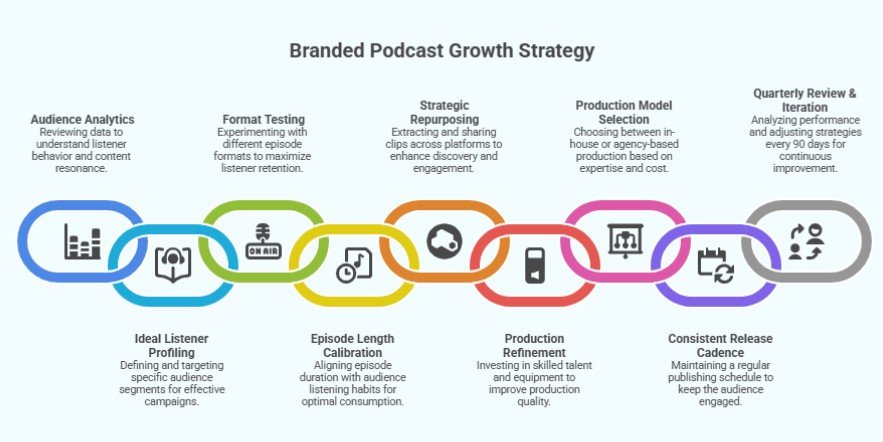
A 60-day guest tour produces seven outcomes at once. Twelve audiences hear the same stance. Buyer trust scales without paid ads. Recognition compounds because the same proof points land in front of overlapping listeners. Authority transfers from the host's brand to your name. Twenty-plus content assets land per appearance. Tracked pipeline lands inside the same quarter. The tour produces a measurement framework that makes the next tour sharper and faster.
Hosting your own show buys you a podcast. Guesting on the right twelve shows buys you pipeline, authority, content, and a repeatable system that pays the deepest founders the highest dividends.
Specific founder cases prove the model. Jennie Nash, co-founder of Author Accelerator, booked podcast appearances on top tier shows in writing and self-publishing and turned them into $50,000 in new revenue. Paul Ross created over $48,000 in revenue from a strategic guesting motion. Cybersecurity firms running deliberate guest-driven motions have attributed $2.3M of pipeline in 9 months to relationships built through podcast appearances.
The same case studies share three traits. Tight ICP focus on the show shortlist. Repeatable message architecture across every appearance. Disciplined post-show motion that converts listeners into calls within seven days.
What to Ship This Week
You have two work blocks ahead. Total time, four hours.
Block One One Hour
Write the stance, three proof points, and bridge ask. Audit them against your three best customer wins. If the stance fails to draw a line in the sand, sharpen it. If the proof points lack specific numbers, replace them. If the bridge ask reads vague, tighten it to one trigger word.
Block Two Three Hours
Build the show shortlist. List 30 candidate shows from your industry. Run each through the 5-Filter Show Selection Test. Keep the top 12. Pull host emails. Send three personalized pitches by Friday referencing one specific episode each host produced in the last 60 days.
You will know within three weeks whether the system works. Watch Pipeline Per Appearance, never download counts. The founders winning at podcast pipeline in 2026 watch one number every Monday morning. Qualified conversations sourced this week from podcast appearances.
That is the budget. That is the bar. Ship the first pitch by Friday.