
Founder comments outperform founder posts in 2026. Comments rent buyer attention while posts beg for it. The founders winning pipeline today comment thirty times a week at sixty named accounts and skip the daily posting grind entirely.
This piece walks through the five layer founder comment stack, the forty comment weekly cadence, four templates founders can steal, three metrics tied to revenue, and a thirty day build from zero to first sourced opportunity. Every other ranking article treats commenting as a reach mechanic. This one treats it as a buyer filtering system.
A founder LinkedIn comments strategy is a five layer system that uses sub 60 hand picked accounts, a stance hook, a disqualification line, and a bridge ask to convert comments into qualified DMs and sourced pipeline. The win sits on account quality first, comment stance second, and weekly cadence third.
Why Founder Comments Beat Founder Posts
Posts cast wide. Comments hunt narrow. A post sits on the founder profile, hoping the algorithm pushes it to the right reader.
A comment lands on a post the buyer already read. The buyer surface comes built in. The founder borrows distribution that took the host two years to build.
LinkedIn shifted the model in January 2026. Comments now count for double the engagement weight of likes, and comments under ten words carry almost zero algorithm credit. Posts with sixty one or more seconds of dwell time average 15.6 percent engagement against 1.2 percent for posts in the zero to three second band.
Impressions across LinkedIn dropped sixty three to sixty six percent since 2023 while engagement per post climbed twelve to thirty nine percent. The platform got smaller and stickier. Reach is rented attention on cold soil. Comments are rented attention on warm soil where the buyer already showed up.
The Founder Authority Asymmetry Advantage
When a founder comments, every reader assigns higher credibility than any SDR can claim. Eighty two percent of people are more likely to trust a company whose leadership engages on social media. Ninety five percent of hidden buyers say strong thought leadership makes them more receptive to sales and marketing outreach (Edelman LinkedIn 2025 B2B Thought Leadership Impact Report).
The SDR fails to replicate this. SDRs sell at scale. Founders sign deals.
A two sentence founder comment carries more weight than fifty SDR DMs because the reader knows the founder owns the outcome. Comment from the seat that closes the deal and the buyer reads every line.
Buyer Research Habits Before The First DM
Eighty three percent of a B2B purchasing decision happens before the buyer engages directly with a provider. Researching, ranking, benchmarking. All of it happens on platforms the founder can influence.
The buyer reads three founder comments on three different posts over two weeks. The buyer clicks the founder profile. The buyer downloads one piece of proof and sends a DM. By the time the founder hears from the buyer, the deal sits half closed.
Posts power profile clicks. Comments power buyer reps. Founders who skip the comment layer skip the most expensive part of the funnel.
Comments As Buyer Filter Never Buyer Net
The frame every other article gets wrong is reach. Reach feeds creators. Pipeline feeds founders.
A creator counts impressions because impressions sell ad inventory. A founder counts sourced opportunities because sourced opportunities sell software.
Comments work as a filter. Each comment should repel the wrong reader and pull the right one. Repel a curiosity scroller. Pull a budget holder. Filter on stance, never on volume.
Three Comment Types That Move Real Pipeline
Three comment shapes do the work. Every other shape feeds vanity.
The contrarian frame comment lifts a sharper take above the host post. The customer receipt comment drops a named outcome that proves a founder claim. The decision replay comment walks the reader through the specific founder choice the post implies.
Generic affirmation comments earn nothing. Algorithm credit stays minimal under ten words. Buyer surface drops to zero. The comment that earned the founder a "great post" reply earned the founder zero pipeline.
The Five Layer Founder Comment Stack
The stack turns commenting from creator mode into pipeline mode. Each layer answers a single founder question.
Who deserves the comment. What triggered the comment. How the comment opens. Who the comment filters out. Where the conversation goes next.

Layer One Account Selection And The Sub 60 Rule
Pick fewer than sixty named accounts per quarter. Verify each one against ICP fit, founder reachability, and recent buying signal. Anything above sixty stops being a target list and starts being a directory.
Sixty accounts times three founder influenced contacts per account equals 180 named humans worth commenting at. Most founder comment lists pad to 300 accounts and stop being a list at all. The Sub 60 Rule restores focus.
The list lives in one spreadsheet. Column one is the account name. Column two is the founder or buyer. Column three is the most recent post you commented on. Column four is the date of the last meaningful buyer surface event.
Layer Two Trigger Selection For Founder Comments
Three post types deserve a founder comment. Everything else burns time.
Post type one is the contrarian claim by a buyer or peer founder. Post type two is the customer receipt by a competitor or adjacent player. Post type three is the open question raised by a buyer in your ICP.
Skip the meme posts, the corporate announcement posts, and the milestone celebrations. The trigger filter saves five hours a week. A founder who comments on twenty triggers a week beats a founder who comments on forty random posts.
Layer Three The Stance Hook Opener
The opening 210 characters of every comment carry the entire weight. Three opener structures land.
The Specific Number Opener anchors the reader in a fact. The Contrarian Claim Opener earns the dwell time. The Buyer Trigger Opener names the exact pain the buyer feels.
Generic agreement openers like "great post" or "love this" earn nothing. The opener has to filter at first read. Most readers scroll. The right reader stops.
Layer Four Disqualification Language
Every founder comment includes one line that filters the wrong reader. The disqualification line trades scale for fit.
A line that reads "this only works for B2B SaaS with deal size over twenty five thousand dollars" repels the wrong reader and pulls the right one. The wrong reader is a curious bystander. The right reader is the budget holder who needs proof the founder understands the deal shape.
The wrong reader scrolls. The right reader replies with a DM. The comment did its job in under sixty seconds.
Layer Five The Bridge Ask
The bridge ask is the next step that surfaces the qualified conversation. The bridge sits inside the comment or trails on a connection request.
Wrote a guide on this exact problem. Built a teardown for one customer last quarter. Happy to share the framework with anyone running the same play. Three sentences, one direction, one ask.
The bridge ask earns the DM. The DM earns the call. The call earns the sourced opportunity. Without the bridge, the comment ends as engagement and nothing more.
The 40 Comment Weekly Operating Cadence
The safe ceiling for manual founder commenting sits at twenty to forty targeted comments per week. Anything above eighty per week starts looking like automation and trips LinkedIn's ninety seven percent accurate detection layer for automated comment behavior.
Two and a half hours a week, split across four blocks. The cadence holds. The buyer surface compounds.
Monday Account Map Sprint
Thirty minutes, every Monday. Refresh the Sub 60 list. Drop any account with zero buyer surface in the last fourteen days. Add any new account triggered by a recent buying signal.
Mondays set the week. A weak account map produces a weak commenting week. Skip the sprint and the cadence falls apart by Wednesday.
Tuesday Through Thursday Engagement Block
Thirty minutes each day, eight to twelve comments per block. Comment only on the three trigger types. Run the five layer stack on every single comment.
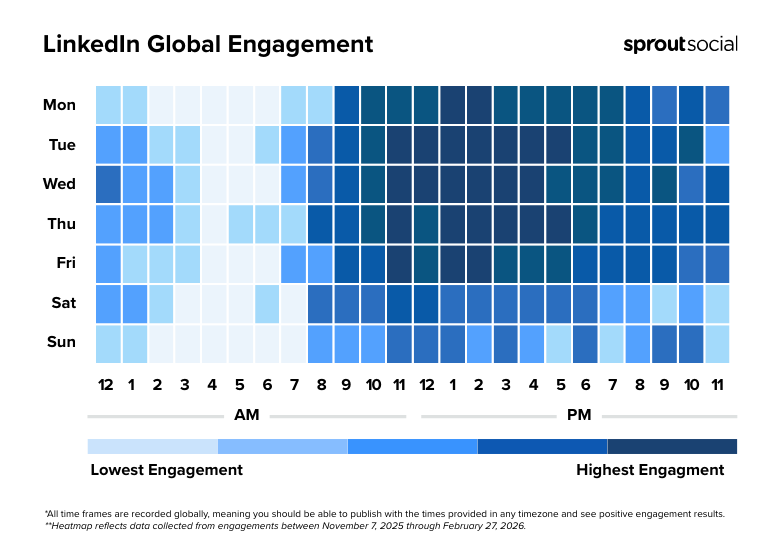
Sprout Social's 2026 data set across 307,000 social profiles ranks Tuesdays from eleven a.m. to five p.m. as the peak LinkedIn engagement window. Founders who match cadence to window double buyer surface for the same hour of work.
Friday Bridge Audit Review
Thirty minutes, every Friday. Pull every DM that arrived from a commented post. Map each DM back to the comment that earned it. Count Qualified Conversation Rate.
Three things matter in the audit. Which stance hook earned the reply. Which account type produced the most DMs. Which template needs retiring. Friday tightens the loop for next week.
Founder Comment Templates Founders Can Steal
Four templates carry ninety percent of the weight. Each one wires the five layer stack into a single comment.
The Contrarian Frame Comment
"That number is the right starting point. The trap most founders fall into is over indexing on it as a leading metric. The fix worth building around is mapping it to the buyer behavior two stages downstream. Wrote this up after we hit the same wall at one of our enterprise customers, happy to share."
The template lands a sharper take, names a real outcome, and signals a bridge piece for the right reader. Comments that include a named customer receipt earn three to five times the algorithm credit of generic comments.
The Customer Receipt Comment
"One of our customers ran this exact play last quarter at a 60K ACV account. The single move that closed the deal was a written disqualification doc handed to the buyer in week two. Happy to share the teardown with any founder running the same motion."
The receipt comment earns the DM in under twenty four hours from the right buyer. The specific number forces specificity. The teardown ask carries the bridge.
The Decision Replay Comment
"Faced the same call eight months ago. The choice came down to running the play in house or hiring an agency to scale it. We ran it in house for one reason. Speed of feedback inside the founder loop. Result was a twenty two percent lift in qualified pipeline over the quarter."
The decision replay anchors the reader inside a real founder choice. Replays earn dwell time. Dwell time earns reach. Reach earns buyer surface.
The Disqualifying Question Comment
"This holds for B2B SaaS over fifty thousand dollar deal size. Founders selling under that threshold should run a different play. Curious which side of the line you sit on."
The disqualifying question repels the wrong reader and pulls the buyer who fits. The question ends the comment with a hook for the right reply. Two sentences, one filter, one ask.
Three Metrics Mapping Comments To Revenue
Engagement rate is the wrong number. Pipeline is the only number that maps to revenue.
Qualified Conversation Rate
The percentage of comments that produced a DM from an ICP account inside fourteen days. Anything under five percent signals weak account selection or weak stance hooks. Anything above twelve percent signals the cadence is dialed.
Track every DM. Source each one back to the comment. Refine the stance hook weekly.
Pipeline Per Comment Hour
Dollar value of sourced opportunity divided by total commenting hours per quarter. The number ranges from five thousand dollars per hour for early founders to fifty thousand dollars per hour for founders running tight cadence.
Pipeline Per Comment Hour rises with account quality. The Sub 60 Rule is the lever. Tighter list, higher number.
Buyer Surface Score
The percentage of weekly comments placed on posts owned by or seen by named ICP accounts. Sixty percent and above means the cadence is buyer focused. Under thirty percent means you are commenting at strangers.
Buyer Surface Score predicts Pipeline Per Comment Hour two quarters ahead. Raise it first and revenue follows.
Founder Comment Mistakes That Burn Pipeline
Six mistakes carry most of the damage.
One, commenting at volume on random posts with no account list. Two, posting "great take" or "love this" with zero stance. Three, skipping the disqualification line and pulling the wrong reader. Four, outsourcing comments to automation that LinkedIn detects with ninety seven percent accuracy. Five, skipping the Friday audit and never refining the stance. Six, believing engagement rate maps to revenue.
The HeyReach takedown on March 25, 2026, removed a 16,400 follower company page and the founder's personal profile after LinkedIn flagged the tool's cloud proxy architecture as policy violating. Compliance ceiling for safe manual founder commenting sits at forty per week with timing variance. Build the cadence inside the ceiling and own the channel for the long term.
Real Founder Results From Comment Led Pipeline
Storylane runs founder led LinkedIn as the dominant outbound channel and books over fifty percent of pipeline from the platform. The team treats every founder comment as a buyer touch.
Brij ran founder led LinkedIn into a tenfold revenue lift and a fivefold pipeline gain inside twelve months, with the channel influencing fifty percent of closed deals. A B2B SaaS consultant grew from three hundred and twelve targeted connections to roughly two thousand five hundred inside ninety days through comment led inbound, ending the quarter with a fully booked retainer pipeline.
The number every operator hit hardest was Buyer Surface Score, never follower count. Owning the conversation in twelve named buyer feeds beat owning the feed of twelve thousand strangers every quarter.
The 30 Day Founder Comment Build
Thirty days. Four sprints. One sourced opportunity by day thirty.
Days one through seven cover stance setup and the Sub 60 list. Write three founder stance lines worth defending. Build the spreadsheet. Verify each account against ICP fit, founder reachability, and a fresh buying signal.
Days eight through fourteen run the daily eight comment block. Log every founder reply, every connection request earned, every profile click that came back to your inbox.
Days fifteen through twenty one layer in disqualification language and bridge asks. Drop the weakest stance hook. Refine the comment templates around the two templates that earned the most DMs in week two.
Days twenty two through thirty measure Qualified Conversation Rate, Pipeline Per Comment Hour, and Buyer Surface Score. Refine the account list. Kill any account that produced zero buyer surface across the month and add three replacements.
The Quiet Engine Behind Founder Comments
Comments reward the founder who would rather lose the reach than fake the fit. The disqualification line signals that bias every time. Buyers who match read the comment as respect. Buyers who miss scroll past and leave the founder time alone.
Pipeline compounds on the right account list, the right stance, and the founder bridge. Every other input is overhead. Twelve named accounts beat twelve thousand followers every quarter of the year.